

Seal LIFAIO Protects Websites, Data and Critical Operations

LIFAIO™ and Seal LIFAIO™, developed by Montreal technology company Technologies Marco Prive.
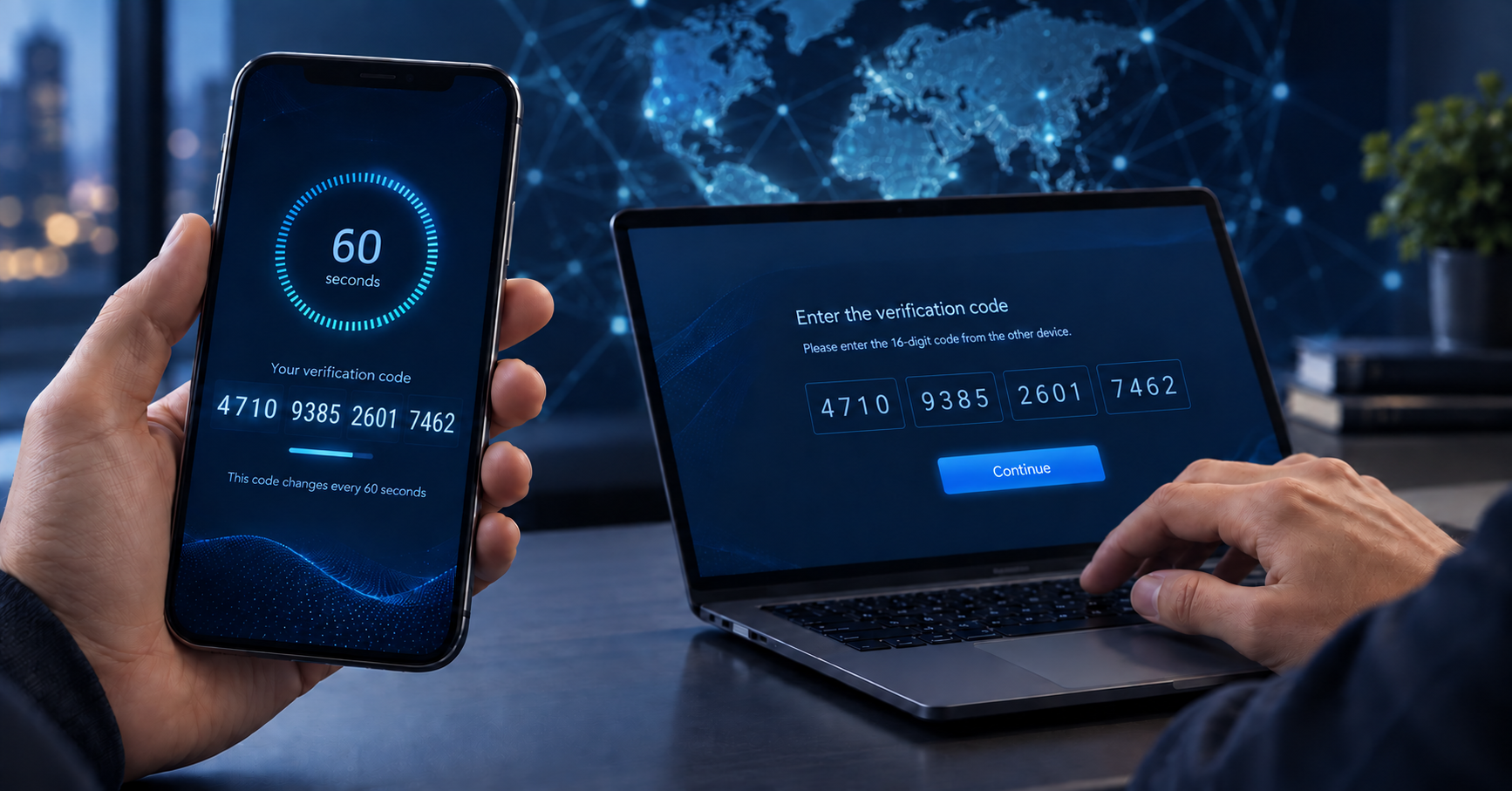
A person checks a 16-digit Seal LIFAIO verification code that changes every 60 seconds by entering it on a computer.

Seal LIFAIO can require separate, time-sensitive approvals from multiple verified humans before a sensitive operation is authorized.
Living, time-sensitive proofs help counter cloned voices, fake websites, stolen credentials and automated fraud.
Seal LIFAIO replaces static proofs with living, time-sensitive verification. Instead of asking users to trust a voice, logo, identity card, website badge or permanent password, Seal provides proofs that can be checked at the moment a decision must be made.
“Modern fraud succeeds because organizations continue to trust information that can be copied,” said Marco Prive, Founder of Technologies Marco Prive. “Seal changes the question. It does not ask whether something looks convincing. It provides a proof that can be checked before a person opens the door, transfers money, releases data or trusts a website.”
Human verification that changes every minute
A verified individual can present a 16-digit Seal code that changes every 60 seconds. Anyone can enter the code at seal.lifaio.com and receive an immediate response identifying the verified organization, verification level and approved information.
No application or account is required for the person performing the verification.
The system can be used when someone claims to represent a company at a residence, during a telephone call, in an email or at a physical meeting. A copied identification card or cloned voice may appear convincing, but it does not possess the verified person’s current Seal code.
Multiple humans for critical decisions
For higher-risk operations, verifying one individual may not be sufficient.
Seal can require the simultaneous participation of two to five different verified people before an operation is authorized. Each participant must provide a valid code during the same limited time window.
This distributed authorization can be connected to operations such as:
- Wire transfers and payment approvals
- Large data exports
- Access to protected archives
- Changes to critical systems
- Release of confidential information
- Supplier or executive instructions
A deepfake of an executive may reproduce a face or voice, but it does not automatically obtain the independent, time-sensitive proofs held by several verified people.
Seal does not assume that an authenticated person is necessarily acting safely. Organizations can determine how many human approvals are required according to the sensitivity of the requested operation.
A website badge tied to the actual domain
Seal LIFAIO also provides a living website seal designed to expose fraudulent copies.
Traditional “verified” badges are static images that can be copied and displayed on a fake website. Seal’s domain protection uses a changing code connected to the domain visible in the visitor’s address bar.
The visitor independently enters the domain being viewed and compares the resulting code with the code displayed by the website. A copied badge remains frozen or fails the domain verification.
Public verification remains free and does not require an account.
Documents and media that can be checked
Seal can also be used to seal documents, invoices, images, audio recordings and videos.
For document verification, the file’s fingerprint can be calculated directly inside the recipient’s browser. The document does not need to be uploaded to Seal for its fingerprint to be compared with the sealed record.
Seal does not decide whether a statement, image or video is objectively true. It provides verifiable evidence of who sealed the item, for what declared purpose and when. This distinction allows recipients to evaluate provenance without asking Seal to act as an arbiter of truth.
Data protection based on human authorization
Seal’s architecture can also protect sensitive databases and archives by placing human authorization between stored information and large-scale extraction.
Normal authorized use can continue below an organization’s configured threshold. When an operation attempts to retrieve information at a scale associated with exfiltration, Seal can require approval from multiple verified humans before the operation proceeds.
This approach addresses a limitation of conventional access control: a compromised or malicious insider may already possess valid credentials. Seal can apply additional human authorization according to what is being attempted, not solely according to who signed in.
Privacy by minimizing what exists to steal
Seal LIFAIO is designed to minimize the personal information retained by the platform. Depending on the service, contact information is used to calculate an irreversible fingerprint and is not stored as ordinary personal data.
Seal does not require GPS tracking, cameras or biometric surveillance for its living-code verification system.
“We do not claim that one technology eliminates every form of fraud or cyberattack,” Marco Prive said. “Our objective is precise: remove unnecessary secrets, make copied proofs lose their value and require verifiable human participation when an operation matters.”
Seal LIFAIO is available in 18 languages. Its technologies are the subject of 10 pending United Kingdom patent applications:
GB2619490.2, GB2619948.9, GB2620153.3, GB2620211.9, GB2620220.0, GB2620253.1, GB2620315.8, GB2620629.2, GB2621074.0 and GB2621382.7.
About Technologies Marco Prive
Technologies Marco Prive is a Montreal technology company and the developer of LIFAIO™ and Seal LIFAIO™. The company develops verification and privacy-focused technologies for identity protection, domain authentication, distributed human authorization, document and media provenance, data protection and ticketing.
Explore Seal LIFAIO:
Verify a code — free, no account required: https://seal.lifaio.com
What Seal protects: https://seal.lifaio.com/go
Technologies Marco Prive: https://lifaio.com
Marco Prive
Technologies Marco Prive
media@lifaio.com
Visit us on social media:
Facebook
YouTube
Legal Disclaimer:
EIN Presswire provides this news content "as is" without warranty of any kind. We do not accept any responsibility or liability for the accuracy, content, images, videos, licenses, completeness, legality, or reliability of the information contained in this article. If you have any complaints or copyright issues related to this article, kindly contact the author above.
